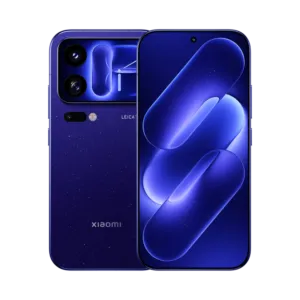
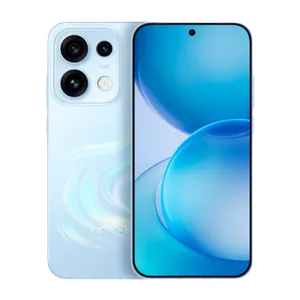
Xiaomi 18 Pro vs Oppo Reno 17

Specs comparison

Compare the Xiaomi 18 Pro (Sep 2026) and the Oppo Reno 17 (Nov 2026) side by side: display, performance, cameras, battery, charging and price, with the better value in each row marked.

Key differences

6
  • Oppo Reno 17 has the bigger screen: 6.56" vs 6.4".
  • Xiaomi 18 Pro has the more powerful chip class: Qualcomm SM8950 Snapdragon 8 Elite Gen 6 (flagship) vs Qualcomm SM7750-AB Snapdragon 7 Gen 4 (upper mid-range).
  • Oppo Reno 17 has the bigger battery: 8,000 mAh vs 7,000 mAh.
  • Xiaomi 18 Pro has the higher-resolution main camera: 200 MP vs 50 MP.
  • Xiaomi 18 Pro offers more RAM: up to 16 GB vs 12 GB.
  • Oppo Reno 17 is newer: released Nov 2026 vs Sep 2026.
Share this comparison
Add a third device Clear all

The best value in a row is marked Best
SpecGist Score 9.3 / 10 · Excellent Best 8.4 / 10 · Very good
Brand Xiaomi Oppo
Versions 26091PN0DG (Global); 26091PN0DC (China) —
Announced September 23, 2026 November 16, 2026
Released September 23, 2026 November 20, 2026
Availability Available Available
Technology GSM / HSPA / LTE / 5G GSM / HSPA / LTE / 5G
2G Bands GSM 850 / 900 / 1800 / 1900 GSM 850 / 900 / 1800 / 1900
3G Bands HSDPA 800 / 850 / 900 / 1700(AWS) / 1800 / 1900 / 2100HSDPA 800 / 850 / 900 / 1700(AWS) / 1900 / 2100 HSDPA 850 / 900 / 2100
4G Bands 1, 2, 3, 4, 5, 7, 8, 12, 13, 17, 18, 19, 20, 25, 26, 28, 32, 34, 38, 39, 40, 41, 42, 48, 66, 71 - International1, 2, 3, 4, 5, 7, 8, 12, 17, 18, 19, 20, 25, 26, 28, 34, 38, 39, 40, 41, 42, 43, 48, 66 - China 1, 3, 4, 5, 8, 18, 19, 26, 28, 34, 38, 39, 40, 41, 42, 43, 48, 66
5G Bands 1, 2, 3, 5, 7, 8, 12, 20, 25, 26, 28, 38, 40, 41, 48, 66, 71, 75, 77, 78, 79, 80, 81, 83, 84, 89 SA/NSA - International1, 2, 3, 5, 7, 8, 12, 18, 20, 25, 26, 28, 38, 40, 41, 48, 66, 77, 78, 79, 80, 81, 83, 84, 89 SA/NSA - China 1, 3, 5, 8, 18, 26, 28, 38, 40, 41, 48, 66, 77, 78 SA/NSA
Speed HSPA, LTE, 5G HSPA, LTE, 5G
Dimensions 151.8 x 72 x 8.5 mm(5.98 x 2.83 x 0.33 in) 157.6 x 75.3 x 8.3 mm(6.20 x 2.96 x 0.33 in)
Weight Global: 198 g / 203 g (6.98 oz)China: 203 g / 208 g (7.16 oz) Best 206 g (7.27 oz)
Build Glass front (Shield Glass 3.0), aluminum frame, glass back or glass-fiber reinforced plastic back Glass front, aluminum frame
SIM Nano-SIM + Nano-SIM + eSIM + eSIM (max 2 at a time) - InternationalNano-SIM + Nano-SIM - China Nano-SIM + Nano-SIM
Protection / IP Rating IP68 dust tight and water resistant (immersible up to 6m for 30 min) IP68/IP69K dust tight and water resistant (high pressure water jets; immersible up to 1.5m for 30 min)
Display Type LTPO AMOLED AMOLED
Display Size 6.4 inches, 100.3 cm2 (~91.8% screen-to-body ratio) 6.56 inches, 105.5 cm2 (~88.9% screen-to-body ratio) Best
Resolution 1120 x 2436 pixels, 19.5:9 ratio 1208 x 2624 pixels, 19.5:9 ratio
Pixel Density ~419 ppi ~440 ppi Best
Refresh Rate 120Hz 120Hz
Peak Brightness 4000 nits 6000 nits Best
Protection Xiaomi Dragon Crystal Glass 3, Privacy Display Crystal Shield Glass
Display Features PWM, Dolby Vision, HDR10+, HDR Vivid, BT.2020 —

Size comparison

Drawn to the same scale, screens included.

9:416.4"Xiaomi 18 Pro6.4" screen · 67.9 × 147.7 mm91.8% screen-to-body9:416.6"Oppo Reno 176.6" screen · 69.7 × 151.4 mm88.9% screen-to-body
  • Xiaomi 18 Pro · 6.4" · 91.8% screen-to-body
  • Oppo Reno 17 · 6.6" · 88.9% screen-to-body
SpecBank4821 0000 0000 1234CARD HOLDERVALID 12/29Bank card (85.6 × 54 mm)9:41Xiaomi 18 Pro151.8 × 72 mm9:41Oppo Reno 17157.6 × 75.3 mm
  • Xiaomi 18 Pro · 6.4"
  • Oppo Reno 17 · 6.6"
9:419:41
  • Xiaomi 18 Pro · 6.4"
  • Oppo Reno 17 · 6.6"
8.5 mm8.3 mm
  • Xiaomi 18 Pro · 6.4"
  • Oppo Reno 17 · 6.6"
MeasurementXiaomi 18 ProOppo Reno 17
Height151.8 mm Shortest157.6 mm
Width72 mm Narrowest75.3 mm
Thickness8.5 mm8.3 mm Thinnest
Weight198 g Lightest206 g
Screen6.4"6.6" Biggest
Screen-to-body91.8% Highest88.9%
Display Type LTPO AMOLED —
Display Size 2.7 inches —
Resolution 912 × 596 pixels —
Pixel Density ~400 ppi —
Refresh Rate 120Hz —
Peak Brightness 4000 nits —
Protection Corning Gorilla Glass Victus 2 —
Display Features Dolby Vision, HDR Vivid, HDR10+, BT.2020 —
Operating System Android Android
OS Version 17 17
Update Support Up to 5 major Android upgrades Up to 5 years of major OS updates
Updates until 2031 (Sep) · 4 years 10 months left 2031 (Nov) · 4 years 11 months left
User Interface HyperOS 4 ColorOS 17
Chipset Qualcomm SM8950 Snapdragon 8 Elite Gen 6 (2 nm) Qualcomm SM7750-AB Snapdragon 7 Gen 4 (4 nm)
CPU Octa-core (2x5.0 GHz Prime + 6x4.0 GHz Performance) Octa-core (1x2.8 GHz Cortex-720 & 4x2.4 GHz Cortex-720 & 3x1.8 GHz Cortex-520)
GPU Adreno 845 Adreno 722
RAM Options 12GB, 16GB 8GB, 12GB
Storage Options 256GB / 12GB RAM512GB / 12GB RAM512GB / 16GB RAM (China)1TB / 16GB RAM (China) 256GB / 8GB RAM256GB / 12GB RAM512GB / 12GB RAM1TB / 12GB RAM
Storage Type UFS 4.1 UFS 3.1
Card Slot No No
Cameras Triple camera Triple camera
Modules 200 MP, f/1.7, 23mm (wide), 1/1.28", 0.61µm, multi-directional PDAF, OIS (CIPA 7.0)200 MP, f/2.4, 75mm (periscope telephoto), 1/1.56", 0.5µm, multi-directional PDAF (12cm - ∞), OIS, 3.2x optical zoom50 MP, f/2.4, 17mm, 102˚ (ultrawide), 1/2.87", 0.61µm, multi-directional PDAF Best 50 MP, f/1.8, 26mm (wide), PDAF, OIS50 MP, f/2.8, 80mm (telephoto), PDAF, OIS, 3.5x optical zoom50 MP, f/2.0, 16mm, 116˚ (ultrawide), AF
Features Leica lenses, laser AF, color spectrum sensor, dual-LED dual-tone flash, HDR, panorama Color spectrum sensor, Multi-focus LED flash, HDR, panorama
Video 8K@30fps (HDR), 4K@30/60/120fps (HDR10+, 10-bit Dolby Vision HDR, 10-bit LOG), 1080p@30/60/120/240/960fps, 720p@1920fps, gyro-EIS 4K@30/60fps, 1080p@30/60/120fps, gyro-EIS, HDR
Cameras Single camera Single camera
Modules 50 MP, f/2.2, 21mm (wide), 1/2.87", 0.61µm, multi-directional PDAF 50 MP, f/2.0, 18mm, 100˚ (ultrawide), AF
Features HDR, panorama Panorama, HDR
Video 4K@30/60fps, 1080p@30/60fps, HDR10+, gyro-EIS, Dolby Vision 4K@30/60fps, 1080p@30/60fps, gyro-EIS, HDR
Loudspeaker Yes, stereo speakers Yes, Dual stereo speakers
Audio Jack No No
Audio Codec aptX HD, aptX Adaptive, LHDC 5, Snapdragon Sound SBC, AAC, aptX, aptX HD, aptX Adaptive, LDAC, LHDC 5.0
Spatial Audio Dolby Atmos —
WLAN Wi-Fi 802.11 a/b/g/n/ac/6e/7, dual-band, Wi-Fi Direct Wi-Fi 802.11 a/b/g/n/ac/6, dual-band
Bluetooth 6.0, A2DP, LE, aptX HD, aptX Adaptive, LHDC 5, MIHC 5.4, A2DP, LE, aptX HD, aptX Adaptive, LHDC 5
GPS / Positioning GPS (L1+L5), GLONASS, BDS, Galileo, QZSS, NavIC GPS (L1+L5), BDS (B1I+B1C+B2a), GALILEO (E1+E5a), QZSS (L1+L5), GLONASS
NFC Yes Yes
Radio No No
USB USB Type-C 3.2, DisplayPort, OTG USB Type-C 2.0, OTG
Other Port Infrared port Infrared port

Fingerprint Yes, (ultrasonic under-display) Yes, (under display, optical)
Face Unlock Yes, (2D AI Face Unlock) Yes (2D optical via the 50MP front camera)
Sensors Accelerometer, gyro, proximity, compass, barometer Accelerometer, gyro, proximity, compass
Other Features Ultra Wideband (UWB) support —
Battery Type Si/C Li-Ion Li-Ion
Battery Capacity 7000 mAh (China)6000 mAh (Global) 8000 mAh Best
Wired Charging 100W wired (China), 90W wired (Global), PD3.0, QC3+, PPS Best 80W wired, 55W PPS, 44W/80W UFCS, 13.5W PD
Wireless Charging 50W wireless Not supported
Reverse Charging 27W reverse wireless Reverse wired (watt unspecified)
Colors Black, White, Pink, Red, Blue, Red Ice Moon White, Cocoa Brown, First Snow White, Encounter Cat (special edition)
Models 2609BPN61G, 2606BPN61G PYK110
Launch MSRP €1,399 | £1,199 —
Found this useful? Share it

Share

Xiaomi 18 Pro vs Oppo Reno 17: full specs comparison